Real Estate Equity Crowdfunding: How It Works, Examples & Investor Insights
Real estate equity crowdfunding is reshaping how ordinary investors gain exposure to property assets. Instead of owning an entire building or relying only on public real estate investment trusts (REITs), you can now co-invest alongside others to own a share of commercial or residential real estate via online platforms. This article delves into what real estate equity crowdfunding means, how it operates, examples of actual projects, the technological advantages, use cases, risks, and FAQs.
Understanding Real Estate Equity Crowdfunding
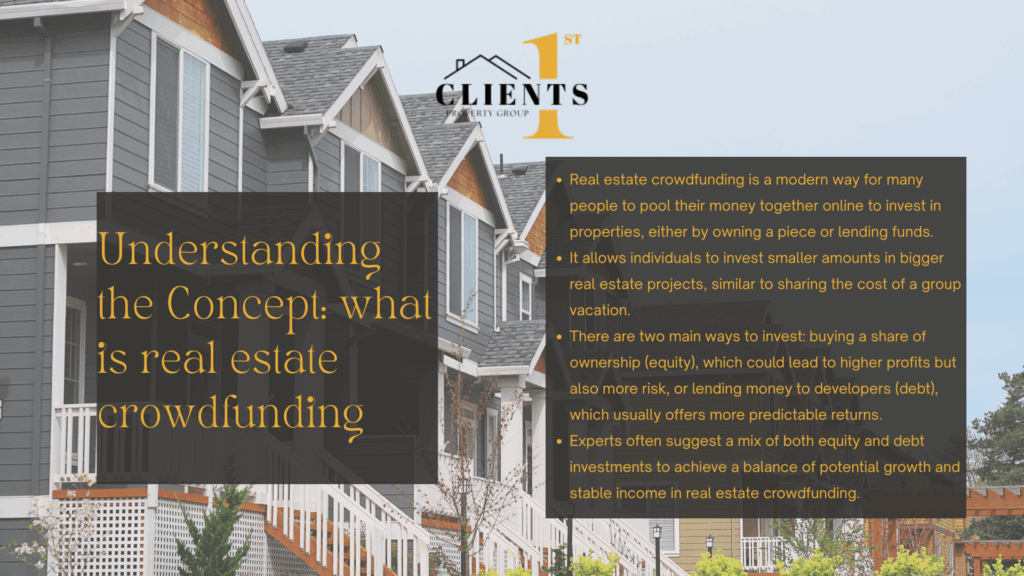
At its core, real estate equity crowdfunding is a model in which multiple investors pool their capital to buy shares of a real property or a real estate development. Each investor holds an equity interest meaning they benefit from rental income, capital appreciation, and eventual sale proceeds proportionally to their share.
Unlike debt crowdfunding, where you lend money to a developer and receive interest, equity crowdfunding means you own part of the property. Your returns depend on how well the property performs.
How the Model Works
- Platform as intermediary
A specialized online real estate crowdfunding platform sources and vets real estate projects. The platform presents projects to investors, handles investment documentation, regulatory compliance, and payment flows. - Project underwriting and vetting
The platform and project sponsor evaluate a potential property or development, perform due diligence such as market studies, financial forecasts, risk assessments, and establish terms of investment (projected returns, hold period, equity waterfall, preferred return, fees). - Investor subscription
Investors review project details and decide to commit funds. They sign legal agreements and pay via the platform. The minimum investment might range from a few hundred to tens of thousands of dollars, depending on the platform and project. - Ownership & operations
Once the project closes, the property is managed by a sponsor or operator. They collect rent, perform maintenance, lease space, and execute operational strategies for value creation. - Distributions & exit
Over the hold period, investors receive periodic distributions (from rental income or excess cash flow). At sale or refinancing, final proceeds are distributed according to equity shares and agreed waterfalls (preferred return, sponsor promote). - Regulation & compliance
Because equity real estate is a security, crowdfunding must comply with securities laws e.g., Regulation D, Regulation A+ in the U.S., or equivalent frameworks in other countries. Platforms manage investor accreditation, disclosures, state securities registration, and reporting.
Key Terms to Know
- Preferred return (“pref”): A threshold return (e.,g. 8 %) paid first to equity investors before profits are shared with sponsors.
- Equity multiple: Total distributions divided by invested capital (for example 1.6× means 60% gain).
- Internal Rate of Return (IRR): Measures annualized return accounting for the timing of cash flows.
- Waterfall structure: The hierarchy in which profits are distributed (investors first, then sponsor, then splits).
- Hold period: Typically several years (3–10+) during which capital is illiquid.
Platforms may also offer pooled funds or REIT-style vehicles, which bundle multiple properties under one umbrella, offering broader diversification.
Real-World Example Projects & Platforms
Below are several real or representative example projects and platforms in equity real estate crowdfunding. These give concrete insight into how it works in practice.
Fundrise (eREITs & Direct Projects)
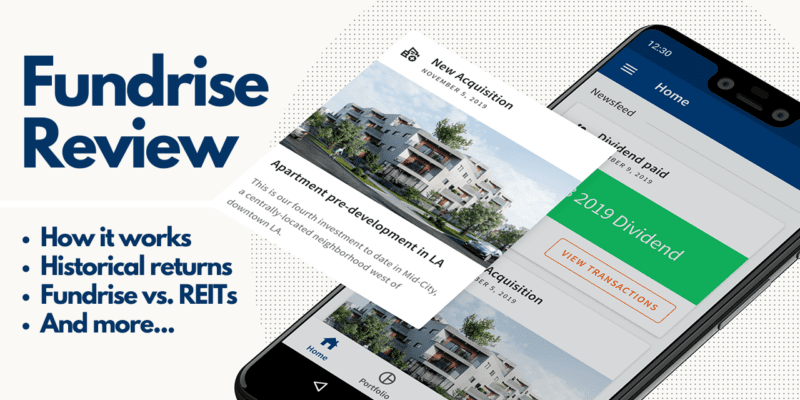
Fundrise is one of the more accessible platforms, including for non-accredited investors in the U.S. It offers eREITs and direct real estate projects.
- Fundrise has historically delivered total annual returns in the 8 % to 14 % range across its portfolio. Some years have seen stronger performance.
- The platform’s eREIT structure pools capital across various projects to provide diversification and reduce risk per project.
- Although some individual property investments are offered, many investors prefer the diversified approach.
This example shows how equity crowdfunding can scale to include many investors in multiple assets, blending both direct equity projects and fund-like vehicles.
EquityMultiple

EquityMultiple is a more specialized platform focusing on commercial real estate for accredited investors. It provides equity and preferred equity investment opportunities.
- It often selects value-add or redevelopment projects in industrial, multifamily, or mixed-use assets.
- Its structure typically includes a preferred return for investors, then splits of profits after certain benchmarks.
- The platform emphasizes rigorous underwriting and reporting to investors.
EquityMultiple is relevant because it exemplifies what professional-level equity crowdfunding can look like for more sophisticated investors.
CrowdStreet

CrowdStreet is one of the prominent names in real estate crowdfunding, focused on large commercial real estate deals.
- Many deals involve office, industrial, or multifamily projects.
- Investors typically get access to direct equity deals rather than pooled funds.
- Returns vary depending on project type, but many projects aim for IRRs in the mid-teens.
CrowdStreet illustrates how equity crowdfunding plays at the institutional scale, allowing individuals to invest in large commercial properties historically reserved for institutions.
Bricksave
Bricksave is a platform that markets global real estate opportunities, often allowing smaller investments in residential or commercial properties in different countries.
- Offers returns up to about 14 % in some projects.
- Allows investors to diversify across countries and property types.
- Adds geographic and currency risk, but broadens access beyond local markets.
This example shows how equity crowdfunding can transcend national boundaries and offer cross-border real estate access.
Benefits of Real Estate Equity Crowdfunding
Real estate equity crowdfunding brings significant advantages enabled by technology, democratization, and modern finance practices. Here are detailed practical benefits.
Lower Barrier to Entry & Democratization
Traditional real estate investing often requires tens or hundreds of thousands of dollars or direct ownership, which limits access. Crowdfunding breaks that barrier by allowing fractional investments—sometimes as low as a few hundred dollars.
This democratization enables everyday investors to gain exposure to commercial real estate that was once reserved for institutions.
Diversification & Risk Spreading
Because you can invest small amounts in multiple projects, you avoid concentration risk. Rather than putting all your capital into one property, you can spread it across several assets, geographies, and property types (multifamily, industrial, and office. This smooths out performance variability.
Passive Investing & Reduced Complexity
Investors do not manage tenants, repairs, financing, or property operations. The sponsor or operator handles day-to-day management, leasing, legal compliance, taxes, and improvements. This passive model allows investors to avoid the burdens of direct ownership.
Potential for Attractive Returns
Equity positions allow investors to capture both stable income (through rental distributions) and property appreciation at exit. In successful projects, returns can exceed yields from public REITs or bonds. Many crowdfunding projects target IRRs in the mid-teens or higher, though risks are commensurate.
Transparency, Reporting & Access to Data
Modern platforms provide dashboards, performance updates, financial statements, occupancy metrics, and property comparisons. This level of visibility helps investors monitor investments reliably—something that was harder in traditional syndications.
Geographic and Sector Access
Investors can gain exposure to markets or asset classes they could not reach locally (e.g., industrial in another state, multifamily in growth regions). This dispersion helps protect against local real estate downturns.
Use Cases: Real Estate Equity Crowdfunding in Action
To see how the concept solves real problems, here are concrete use cases of who uses it and why.
Use Case 1: Young Investor Building Real Estate Exposure
A 28-year-old professional wants to diversify beyond stocks and bonds but doesn’t hahave the pital to purchase real estate. By investing small amounts in several equity crowdfunding projects, they gradually build a real estate portfolio without the complexity of landlord duties.
This strategy solves the barrier of large capital requirements and operational burdens.
Use Case 2: Retirees Seeking Passive Income
Retirees may desire consistent cash flow and capital appreciation. By allocating part of their portfolio into equity crowdfunding deals with regular distributions and long-term appreciation, they can gain real estate income without managing rentals.
This helps address the challenge of generating passive real estate income without hands-on involvement.
Use Case 3: Geographic Diversification for Local Investors
A real estate investor in a region with weak growth might want exposure to faster markets elsewhere. Through crowdfunding, they can invest in properties in high-growth urban markets or industrial zones without relocating or dealing with remote management.
This use case tackles regional risk and concentration.
Use Case 4: Institutional-Quality Access for Non-Institutional Investors
Traditional institutional investors have access to large commercial deals. Crowdfunding allows smaller investors to co-invest in those same types of deals. Putting capital into projects led by experienced sponsors gives retail investors institutional-level exposure.
This addresses the access imbalance between large investors and individuals.
Use Case 5: Portfolio Strategy & Yield Enhancement
In a balanced portfolio, investors may allocate a slice (5–20 %) to real estate equity crowdfunding to boost yield and reduce correlation with stocks and bonds. Over time, the income and appreciation from real estate can improve total portfolio returns while providing a downside buffer in equity downturns.
This use case demonstrates strategic portfolio design rather than treating real estate crowdfunding as the entire portfolio.
Risks and Challenges in Equity Crowdfunding
Despite its promise, equity crowdfunding carries important risks that investors must understand and manage.
Illiquidity & Long Holding Periods
These investments are not traded on public markets. Your capital is typically locked for the full hold period (often 3 to 10 years). Early exits, if permitted, often come with penalties or discounting.
Sponsor and Execution Risk
Much depends on the sponsor’s ability to manage the property, execute improvements, lease space, and exit at a profit. Poor execution, cost overruns, or tenant vacancies can severely erode returns.
Market and Economic Cycles
Real estate is sensitive to macro factors: interest rates, local economy, employment, supply/demand dynamics, and lending conditions. A downturn can reduce valuations and delay exits.
Projection Optimism & Bias
Platforms and sponsors often present optimistic forecasts. Realized returns may fall short, especially in worst-case scenarios. Beware of overly aggressive IRR assumptions.
Fee and Expense Drag
Platforms and sponsors take fees for management, acquisition, disposition, and performance (promote). These fees can reduce net returns significantly, especially for marginal projects.
Regulatory & Platform Risk
If a platform fails, mismanages funds, or suffers fraud, investor capital may be at risk. Also, regulatory changes can affect crowdfunding rules, investor rights, or securities treatment.
Concentration Risk
Putting too much capital into a single project or platform increases exposure to idiosyncratic risk. Even with diversification, overexposure to real estate can magnify downturns.
Best Practices for Investors
To mitigate risk and maximize potential in real estate equity crowdfunding, consider these strategies:
- Diversify across projects: Spread capital across multiple properties, types, and geographies.
- Review sponsor track record: Prioritize sponsors with proven success and transparent communication.
- Scrutinize financials and sensitivity analysis: Check how returns change under downside scenarios (vacancy rise, cost increases).
- Understand fee structure: Know acquisition, management, disposition, and promotion fees.
- Mind liquidity constraints: Assume capital will be locked until exit unless secondary markets exist.
- Invest only what you can afford to lose: Treat part of your portfolio as a higher risk/return segment.
- Use platform tools and dashboards: Monitor performance and read updates—stay engaged.
- Balance with liquid assets: Keep core assets (stocks, bonds, cash) to maintain flexibility.
Frequently Asked Questions
Q1: What returns can I realistically expect from equity real estate crowdfunding?
Typical target returns are in the 8 % to 16 % annualized range, though exceptional deals may exceed that. Some platforms’ average net returns (after fees)are between 10 % and 14 %. Past performance is not guaranteed. (Sources: real estate investing analyses)
Q2: Can non-accredited investors participate?
Yes, in many jurisdictions, including the U.S,.fter regulatory changes. Some platforms allow non-accredited participation via Regulation A+ or specific offerings with lower minimums. But some deals remain restricted to accredited investors only.
Q3: How liquid are these investments?
Very limited. Equity crowdfunding investments typically lock your capital for the entire hold period (3–10 years). Secondary markets, if offered, often come at discounts or limited redemption windows.