How to Purchase REIT Shares: A Complete Guide to Investing in Real Estate via Stocks
Real estate is often regarded as a cornerstone of diversified portfolios, but direct property ownership requires capital, management, and risk exposure. An efficient alternative is investing through Real Estate Investment Trusts (REITs). REITs allow investors to own shares in income-producing real estate portfolios, with many of the advantages of property investing while gaining liquidity, diversification, and ease of access.
In this guide, you will learn:
- What “purchase REIT shares” really means
- How the mechanics work (public, non-public, mutual fund/ETF)
- Examples of REIT share types
- Benefits (including technological innovations)
- Use cases: real situations where buying REIT shares solves investor problems
- Risks and strategic considerations
- Frequently asked questions
Let’s begin by understanding what it means to purchase REIT shares.
Understanding “Purchase REIT Shares”

When we say “purchase REIT shares,” we mean acquiring ownership interests in a REIT via shares or units. These REIT shares represent fractional ownership in a real estate portfolio managed by the REIT entity.
Unlike owning a single building, purchasing REIT shares gives investors exposure to a basket of properties, residential, office, retail, industrial, healthcare, or specialized assets like data centers, without the burden of property operations.
There are three broad categories of how one can purchase REIT shares:
- Publicly traded REITs (listed on stock exchanges)
- Non-listed (public, but not on exchange) REITs
- Private REITs (available to institutional or accredited investors)
Additionally, investors can gain REIT exposure via REIT mutual funds or REIT exchange-traded funds (ETFs) that pool many REITs into one vehicle. Publicly traded REIT shares are the most accessible form for most retail investors.
Because REITs are structured to generate income through property, when you purchase REIT shares, your return typically involves:
- Dividend income (rent flows passed through)
- Potential value appreciation (as property values increase)
Let’s explore how you actually go about purchasing REIT shares.
How to Purchase REIT Shares: Step by Step
Publicly Traded REITs (Most Common Route)

To purchase REIT shares in a publicly traded REIT:
- You open a brokerage or investment account (if you don’t already have one).
- Through that account, you search for the REIT’s ticker symbol (just like a stock).
- You place a buy order at the market price or the limit price.
- Once executed, you own shares and become eligible for dividends and possible appreciation.
Because publicly traded REITs are listed on major exchanges, buying and selling is straightforward. Their stocks trade like ordinary equities.
Using REIT Mutual Funds or ETFs
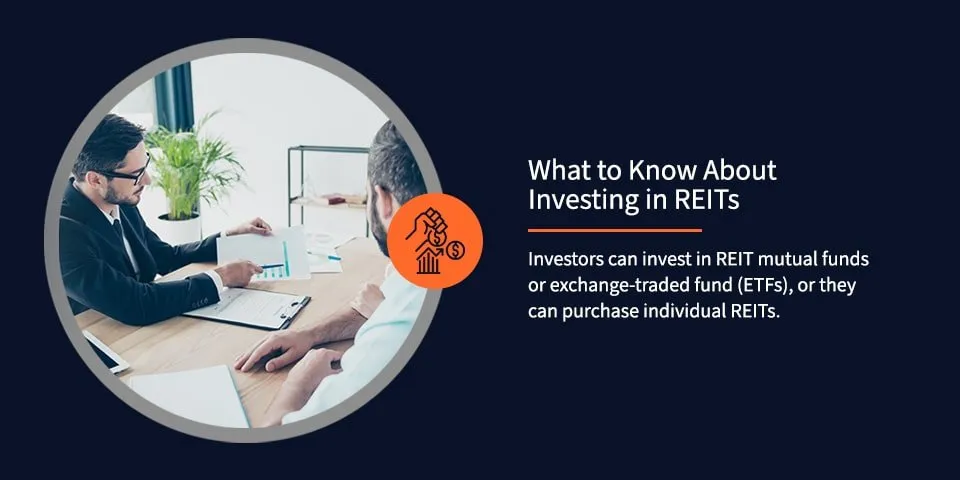
Rather than picking a single REIT, many investors choose REIT mutual funds or REIT ETFs:
- These funds hold a diversified mix of REITs across property types and geographies.
- You purchase fund shares through your brokerage or investment account.
- This spreads risk across many REITs, rather than depending on the performance of one.
This is a simpler and often safer way to gain REIT exposure, especially for those less comfortable picking individual real estate companies.
Non-Listed and Private REITs
Non-listed REITs are not traded on public exchanges. To purchase such shares:
- You typically go through a broker or financial adviser who participates in that REIT offering.
- These REITs often have high up-front fees and stricter liquidity constraints.
- Private REITs are generally limited to institutional or accredited investors and often have minimum investment thresholds.
Because of their lower liquidity and higher fees, non-listed and private REITs are less common for average investors, though they can offer access to unique real estate opportunities.
Real-World Examples of REIT Share Types
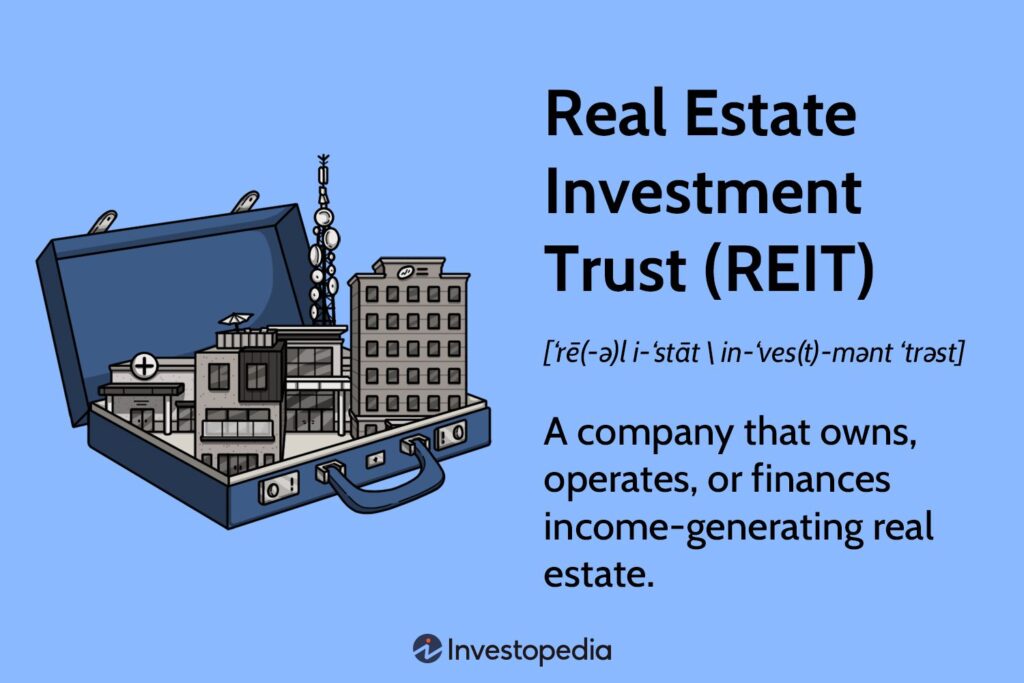
Here are three illustrative examples of REIT share types and how purchasing them works in practice:
Office REIT share example
Example: An Office REIT in a major city issues publicly traded shares. If you purchase 100 shares of this REIT, you own a portion of that REIT’s portfolio of leased office buildings. You are entitled to dividends and can benefit if the REIT’s net asset value rises.
Industrial / Logistics REIT share
Example: A Logistics REIT focused on warehouses and distribution centers. As e-commerce grows, demand for industrial real estate increases. By purchasing shares in such a REIT, you indirectly invest in the growth of logistics infrastructure.
Healthcare / Medical REIT share
Example: A Healthcare REIT that owns hospitals, medical office buildings, or senior care facilities. You purchase shares and gain exposure to the healthcare real estate space, with potential for stable tenant demand even in economic downturns.
Insert image of the product: REIT ETF share.
Example: A REIT ETF holds shares of dozens of REITs across sectors. When you purchase this ETF share, you get automatic diversification across multiple real estate assets and operators.
In all these cases, your ownership is in shares, not the physical properties themselves. The REIT management handles property operations, tenant relationships, maintenance, and compliance.
Benefits of Purchasing REIT Shares (Including Technology-Driven Advantages)
Income Generation and Dividend Yields
One of the primary attractions of REITs is dividend income. Because REITs are required to distribute the majority of their taxable income (often 90% or more) to shareholders, they tend to offer higher yields relative to many traditional equities.
For investors seeking passive income, REIT dividends provide a relatively predictable cash flow stream derived from rental incomes collected from tenants across the properties in the REIT’s portfolio.
Diversification and Real Estate Exposure
Purchasing REIT shares allows investors to diversify their portfolios by adding real estate exposure. Real estate often has different performance cycles compared to stocks or bonds, offering a potential hedge.
With REITs, you can gain access to property types (office, retail, industrial, healthcare, logistics) and geographic markets that would be difficult to invest in individually. This diversification helps smooth returns and reduce idiosyncratic risk.
Liquidity and Transparency
Publicly traded REIT shares are liquid, meaning you can buy or sell them on exchanges during market hours. This is a major advantage over direct real estate investments, which are often illiquid and take time to transact. Additionally, REITs offer transparency in financial reporting, valuations, and operations analogous to other public companies.
Inflation Hedge and Capital Appreciation Potential
Real estate revenues (rents) tend to increase over time, especially if leases contain escalation clauses tied to inflation. So REIT shares can function as a partial inflation hedge.
Over the long term, there is also potential for capital appreciation if property values rise or the REIT successfully improves or repositions its assets.
Tax Efficiency and Favorable Structure
REITs enjoy certain tax advantages. A REIT that qualifies under tax law can deduct dividends paid to shareholders from its taxable income, thus often avoiding corporate income tax at the entity level.
At the investor level, however, REIT dividends are typically taxed as ordinary income rather than the lower capital gains rate. That said, some tax regimes allow partial deductions or pass-through allowances (such as a 20% deduction on qualified business income in certain jurisdictions).
Advantages Technology & Innovation
Technology plays an increasingly pivotal role in enhancing the value and manageability of REITs. Below are several technology-related benefits:
- Data analytics and predictive maintenance: REITs can collect and analyze operational data from properties (energy usage, tenant patterns, maintenance needs) to optimize operations and reduce downtime.
- PropTech integration: Smart sensors, IoT systems, energy management automation, and building management systems can drive cost efficiencies and sustainability.
- Digital tenant services and experience: Technology platforms enable tenant engagement apps, smart building access, and remote monitoring, improving satisfaction and retention.
- Virtual valuation and due diligence tools: Advanced software can streamline property appraisal, risk modeling, and asset management, enabling more precise acquisition decisions.
By leveraging digital tools, REITs can cut operating costs, elevate asset performance, and remain competitive in modern real estate markets. These advantages also ultimately support better returns to shareholders.
Use Cases: When and Why Investors Purchase REIT Shares
Use Case 1: Income-Focused Investors Seeking Passive Cash Flow
An investor nearing retirement wants consistent income but does not want the complexity of being a landlord. By purchasing REIT shares, the investor receives quarterly or monthly dividend payouts from a diversified real estate portfolio, a passive income stream without direct property management burdens.
Use Case 2: Portfolio Diversification and Risk Mitigation
A balanced investor wants to reduce exposure to equities or fixed income. Adding REIT shares introduces a real asset class that behaves differently from stocks and bonds. This diversifying allocation can improve the overall risk/return profile of their portfolio, especially in volatile markets.
Use Case 3: Gaining Exposure to Real Estate Markets Without Large Capital
Many individual investors lack the capital to buy a full building or property. Purchasing REIT shares allows small investors to get access to large-scale real estate projects like commercial complexes, logistics hubs, or specialty assets at a much lower entry point.
Use Case 4: Capital Appreciation with Income in Growth Markets
An investor expects certain sectors, such as industrial or logistics, to grow due to rising e-commerce demand. By investing in REITs specialized in these property types, they gain both income and potential appreciation as demand rises in that sector.
Use Case 5: Institutional or Retirement Plans Seeking Real Asset Exposure
Large institutional portfolios or retirement plans often allocate part of their capital to real assets for inflation protection and diversification. Purchasing REIT shares offers a scalable way to embed real estate exposure within existing portfolio structures without direct ownership hassles.
These use cases demonstrate how “purchase REIT shares” solves practical investor needs: income, diversification, access, growth exposure, and institutional scalability.
Risks, Challenges & Strategic Considerations
While buying REIT shares offers many benefits, there are important risks and factors to consider:
Sensitivity to Interest Rates
REIT valuations are sensitive to interest rate changes. As rates rise, discount rates and yield expectations adjust upward, which can depress REIT stock prices even if property fundamentals remain stable.
Dividend Tax Treatment
REIT dividends often get taxed as ordinary income rather than favorable qualified dividends or capital gains rates, which can reduce net returns for high-bracket investors. You must understand the tax impact in your jurisdiction.
Leverage and Debt Risk
Many REITs use leverage (debt) to enhance returns. If interest costs rise or property cash flows deteriorate, debt servicing could strain the REIT. Prudence in evaluating a REIT’s balance sheet is essential.
Property and Sector Concentration
Some REITs concentrate on specific asset types (e.g., retail, hotels) or geographies, which increases vulnerability to sector downturns or local economic shifts.
Liquidity Differences in Non-Listed / Private REITs
Non-traded and private REITs often lack liquidity and have limited mechanisms for share redemption. Investors may be locked in for longer durations, and valuations may be less transparent.
Management and Fee Risks
Some REITs delegate property management to external managers. Misalignment of incentives or high fees can reduce returns. Non-traded REITs, in particular, may have high up-front costs.
Market Volatility & Real Estate Cycles
REITs are still equities and thus subject to stock market volatility. They may fluctuate based on macro conditions, sentiment, and economic cycles affecting real estate demand.
A prudent investor should analyze:
- The REIT’s financials (debt ratios, payout coverage)
- Quality of assets and tenant base
- Diversification across properties and geography
- Historical dividend consistency and growth
- Manager reputation and alignment
Strategic Tips for Investors Who Want to Purchase REIT Shares
- Use REIT mutual funds or ETFs to start with diversification if uncertain about picking individual REITs.
- Favor REITs with conservative leverage, strong coverage ratios, and diversified property types.
- Be mindful of taxes—hold REITs in tax-advantaged accounts if possible (IRAs, pensions).
- Assess how interest rate cycles affect your expected returns.
- Monitor the REIT’s property sectors and exposure (e.g. retail vs industrial).
- Evaluate management quality and transparency in reporting.
Frequently Asked Questions (FAQ)
Q1: What kinds of REIT shares can I purchase?
You can purchase shares of publicly traded REITs, which are listed on exchanges and trade like stocks. You can also access REIT exposure via REIT mutual funds or exchange-traded funds (ETFs). For non-listed or private REITs, you typically purchase through brokers who offer those offerings, but those shares are less liquid and subject to higher fees.
Q2: Are REIT dividends guaranteed?
No, REIT dividends are not guaranteed. They depend on the underlying rental income and property performance. While many REITs aim for stable dividends, changes in occupancy, tenant defaults, or economic conditions can lead to dividend cuts. Always check dividend coverage, property performance, and management stability.
Q3: Should I purchase REIT shares now, or wait?
Timing depends on interest rates, property valuations, economic cycles, and your personal investment horizon. If property fundamentals and yields appear attractive and interest rates are stable or falling, it may be a good time. However, always align the decision with your risk tolerance, allocation strategy, and holding period, rather than seeking perfect timing.