Top Aladdin Alternatives for Asset Management in 2025: Platforms to Consider
BlackRock’s Aladdin system, short for Asset, Liability, and Debt and Derivative Investment Network, has long been considered one of the most advanced, integrated platforms for portfolio management, risk analytics, and front-to-back operations.
However, its complexity, cost, and sometimes steep barrier to entry drive many institutions, asset managers, and wealth firms to explore Aladdin alternatives. These alternatives may offer more flexibility, modular deployment, better pricing, or specific functionality (e.g., private markets, risk overlays).
In this article, you will learn:
- What BlackRock Aladdin does and its limitations
- Key criteria to evaluate alternatives
- Several real-world alternative platforms with strengths and trade-offs
- Technology and architectural benefits in modern systems
- Use cases: when an alternative makes sense
- FAQs to clarify common doubts
By the end, you should have a clear framework to assess which Aladdin alternative may suit your firm’s needs.
What BlackRock Aladdin Does and Why Alternatives Are Needed
Before comparing alternatives, it’s important to know Aladdin’s scope and where it might fall short.
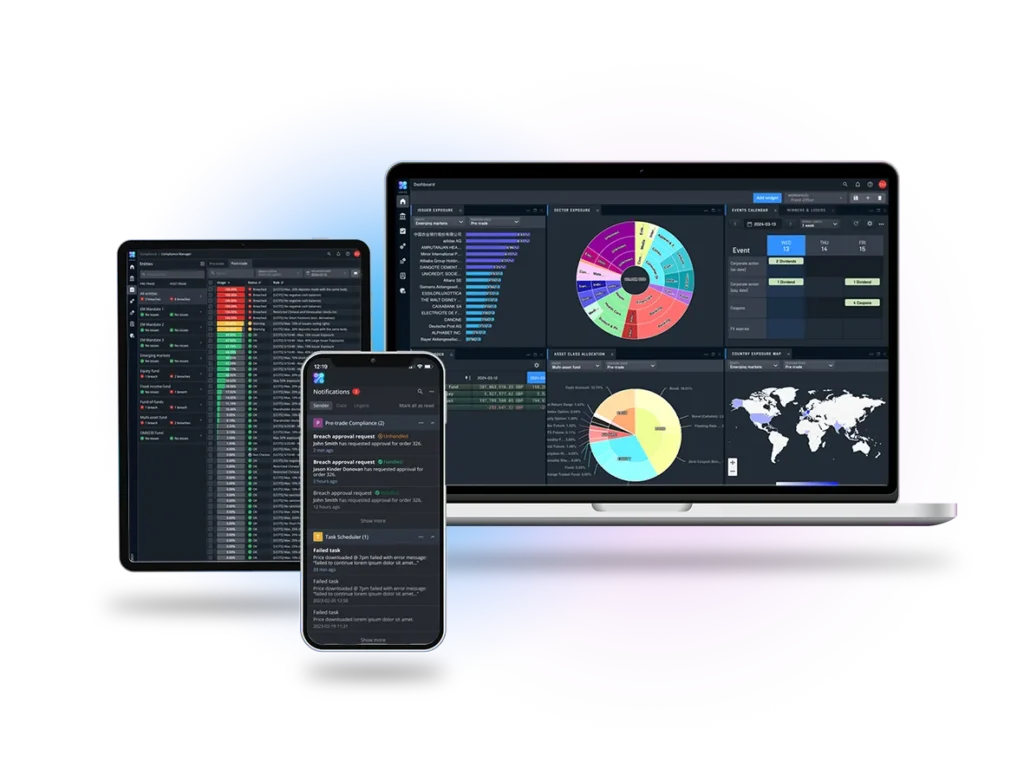
Aladdin is a highly integrated system used by major asset managers. It combines portfolio management, risk analytics, trading, compliance monitoring, performance attribution, operations, and data infrastructure into a unified platform.
That said, even a system as capable as Aladdin has limitations that lead organizations to consider alternatives:
- High cost and licensing structure tailored to very large institutions
- Complex implementation and long onboarding for full front-to-back integration
- Less modularity in certain legacy parts of the platform
- Limited customization flexibility for niche workflows or emerging alternative assets
- Vendor lock-in risk for firms with evolving technology stacks
Because of these constraints, many asset management firms are evaluating next-generation or competing platforms that offer better modularity, cost control, or specialized capabilities.
Criteria for Evaluating Aladdin Alternatives
When comparing platforms to Aladdin, here are the key dimensions and criteria to evaluate:
- Scope & Modularity
Can the platform support front-office, middle-office, back-office, or just certain modules? Modularity allows incremental deployment. - Asset Class Coverage
Does it support equities, fixed income, derivatives, private markets, alternative investments, structured products, etc.? - Risk & Analytics Tools
Scenario analysis, stress testing, factor modeling, VaR, attribution, liquidity modeling. - Trade Order Management & Execution
Integration with brokers, OMS capability (order creation, routing, execution), and compliance checks. - Data Architecture & Infrastructure
Whether it uses a unified data repository, real-time feeds, reconciliation, normalizations, or master data management. - APIs & Integration
Ability to integrate with external systems: accounting, CRM, reporting, risk models, third-party data providers. - User Experience & Dashboards
Modern UI, intuitive workflows, asset monitoring, alerts, dashboards, drill-down analytics. - Pricing & Licensing Model
Fixed versus usage-based pricing, scalable licensing across teams, cost of scaling to more users or assets. - Implementation & Support
Speed of deployment, vendor support, professional services, migration tools, and user training. - Security, Governance & Compliance
Access controls, audit trails, encryption, compliance modules, and regulatory reporting features.
Using these criteria, let’s review several real-world platforms that are considered strong Aladdin alternatives.
Real-World Alternatives to Aladdin
Below are five prominent platforms used in the investment management and wealth technology space that compete or complement Aladdin. Each example includes a detailed explanation of what they offer and where their strengths lie.
SimCorp Dimension

SimCorp Dimension is a widely recognized front-to-back investment management platform. It is used by large asset managers, pension funds, and insurers.
One of its strengths is deep coverage of multiple asset classes and strong support for investment book of record (IBOR) architecture. It enables real-time portfolio and order management, risk and performance, operations, and post-trade processing.
Because of its maturity and feature richness, SimCorp can rival Aladdin in full-lifecycle capabilities. It is often appreciated for its completeness, but potential users must weigh cost and complexity when adopting it for mid-sized firms.
SimCorp aims to be configurable, allowing clients to pick relevant modules, though full adoption can be resource-intensive. For firms needing a robust, all-in-one solution with strong governance and scalability, SimCorp is a serious contender.
Charles River Investment Management System (IMS)
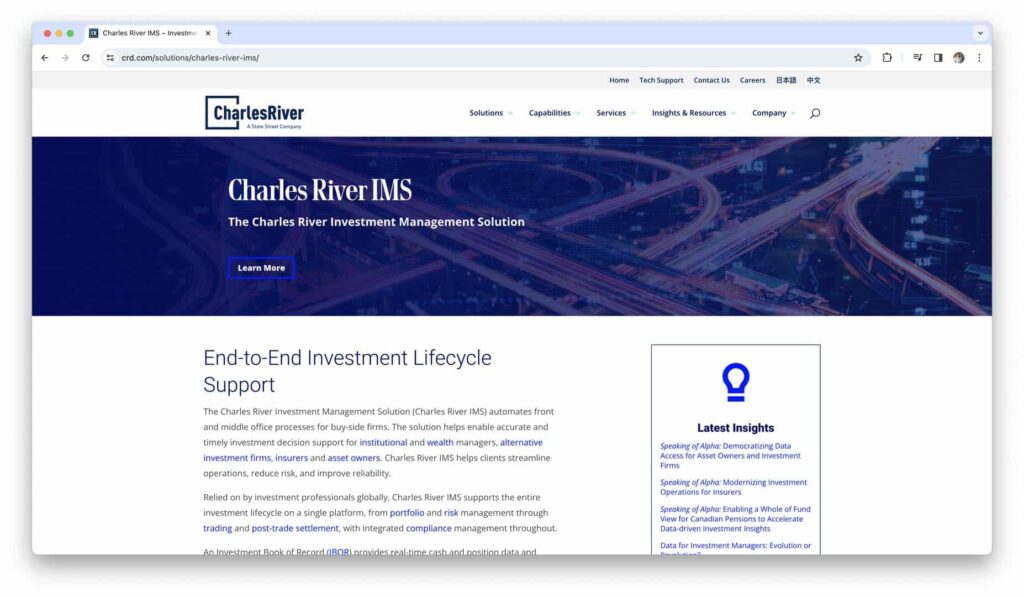
Charles River IMS, now part of State Street, is another heavyweight in the asset management platform space. It offers order and execution management, compliance, portfolio management, and performance attribution in an integrated stack.
Due to its strong execution and compliance features, many firms adopt Charles River for front-to-middle workflows, sometimes combining with other systems for back-office functions.
State Street’s backing also gives credibility and scale, enabling global support and integration. Charles River is often pitched as a direct Aladdin alternative for firms that prioritize trade workflow, compliance, and modular adoption across offices.
Its flexibility and integration with vendor ecosystems make Charles River a practical choice when firms want to adopt best-in-class modules without full Aladdin dependency.
Allvue Systems

Allvue is a modern platform that has carved out a niche among alternative investment managers, private capital firms, and fund operations.
It provides modules for fund operations, portfolio monitoring, investor reporting, compliance, and accounting. It is often seen as more lightweight and flexible compared to legacy institutional platforms.
For firms focused heavily on private markets (private equity, private credit, infrastructure), Allvue offers competitive depth and leaner implementation cycles. Firms looking for an alternative to Aladdin’s full-scale capability, especially in the alternative asset domain, may favor Allvue for its adaptability.
Fusion Invest (Finastra)
Fusion Invest is part of the broader Fusion ecosystem and provides portfolio insight, operations, trade lifecycle, and analytics in a modular framework.
It supports deployment in the cloud or on-premises, delivering flexibility in architecture choices. Fusion Invest emphasizes open architecture and integration, allowing organizations to fit it into varied stacks rather than being locked into a monolithic system.
Because of its modular design, Fusion is useful for firms that want to grow capability over time, starting perhaps with portfolio and analytics, then layering in compliance, reporting, or front-office modules.
AlternativeSoft / Northstar / enVisual360
These platforms occupy more specialized or boutique positions in the market and are often compared to Aladdin for specific segments:
- AlternativeSoft is used for analytics, fund selection, and research, especially among hedge fund allocators. It is not a full front-to-back system, but it offers powerful modeling and portfolio insight.
- Northstar Risk is more focused on risk modeling, liquidity analytics, scenario management, and stress testing. It can integrate with other systems to provide the risk overlay that some firms use as an alternative to Aladdin’s risk modules.
- enVisual360 focuses on modular wealth and investment management, allowing firms to license specific capabilities rather than adopting full infrastructure. This appeals to smaller firms or advisory businesses that want flexibility and a lower customization burden.
These more focused tools may not replace Aladdin entirely, but they can be part of an alternate stack or niche substitute in risk, analytics, or wealth management.
Benefits of Modern Technology in Aladdin Alternatives
When evaluating Aladdin alternatives, one of the key differentiators lies in their technological design. Below are the benefits that modern platforms bring, often surpassing legacy systems.
Modularity and Scalability
Newer platforms tend to be modular, allowing firms to adopt only the needed components (e.g., risk, portfolio, compliance). This modular approach reduces upfront cost and complexity and supports scaling over time.
Scalability in architecture (cloud-native, microservices) enables handling large volumes of assets, increasing user counts, and high-performance data processing as firms grow.
Unified Data Architecture
Modern systems aim to break silos by using a central data model or data warehouse. This ensures one “source of truth” for positions, transactions, market data, and analytics.
Data normalization and reconciliation become more seamless, improving accuracy, reducing manual interventions, and enabling real-time insights across front, middle, and back offices.
Advanced Analytics & AI / Machine Learning
Platforms increasingly embed AI/ML models to predict performance, flag anomalies, suggest allocations, and optimize operations. Risk models, scenario analysis, and attribution engines benefit from data-driven enhancements.
These tools augment human decision-making rather than just replicating static formulas.
Stronger APIs & Integration Capability
Modern alternatives are built with a service-oriented or API-first philosophy. This facilitates connections to CRMs, custodians, accounting systems, ESG data providers, and external risk tools without heavy custom integration.
Cloud & Hybrid Deployment Options
Cloud deployment removes infrastructure burden on firms and allows rapid updates, global availability, and scalability. Hybrid setups (partial on-premise) provide flexibility where data sovereignty or compliance requires local infrastructure.
Better User Experience & Dashboards
Legacy platforms often struggle with user-friendliness. New alternatives emphasize UI/UX design, interactive dashboards, alerts, drill-down navigation, and customizable views for various roles (portfolio manager, compliance, operations).
These technology upgrades translate into real-world productivity gains, lower total cost of ownership, and faster adoption.
Use Cases: When an Aladdin Alternative Is a Better Fit
Below are scenarios illustrating when organizations might favor an Aladdin alternative over adopting or expanding with Aladdin.
Use Case 1: Mid-Sized Asset Manager Seeking Core Functionality
A midsize firm lacks budget for full Aladdin deployment but wants robust portfolio, risk, and order management tools. They adopt a modular alternative (e.g., Charles River or Allvue) to handle key functions without overextending.
Over time, they can add modules and integrate other systems, instead of incurring the full complexity and cost of Aladdin from the start.
Use Case 2: Private Markets / Alternative-Focused Firm
A firm focused heavily on private equity, real estate, or alternative credit may find Aladdin’s legacy on public markets less optimal. They might choose Allvue or specialized fund ops platforms that emphasize private market workflows, fund accounting, capital calls, waterfall modeling, and LP reporting.
Use Case 3: Risk-First Overlay
An institution may already use multiple portfolio systems but desires a robust risk and stress testing overlay. They adopt a platform like Northstar Risk or integrate modular risk tools that compete with Aladdin’s risk modules, pairing them with existing systems.
Use Case 4: Wealth Management / Advisory Firms
For wealth managers and private banks, a leaner, more flexible system may be preferable. Platforms like enVisual360 or similar modular systems allow wealth firms to manage client portfolios, reporting, and compliance workflows without the enormity of Aladdin’s full institutional infrastructure.
Use Case 5: Phased Migration Strategy
A large institution with legacy infrastructure may decide to migrate parts of its stack, starting with risk or compliance, into a modern alternative platform, then gradually phase out older systems. This reduces disruption and allows incremental improvement while eventually replacing Aladdin in full or in part.
How to Choose the Right Alternative
When selecting an alternative to Aladdin, consider the following decision steps:
- Define your core requirements
Decide which modules you need now (risk, order, compliance, accounting, private markets) and which can come later. - Match asset coverage
Ensure the platform supports all asset types you manage (public equities, fixed income, derivatives, alternatives). - Evaluate data architecture and integration capability
Check how easy it is to connect external systems, such as accounting, custodians, CRM, or data providers. - Assess the vendor’s implementation and support capability
Some platforms offer strong migration tools, professional services, and global support. - Consider pricing model & scaling costs
Be wary of steep per-user or per-asset pricing, and plan for growth. - Test usability and adoption
Ask for user demos, trial access, and evaluate UI and workflow efficiency for your teams. - Ensure compliance, security, and governance features
Check for audit trails, access control, encryption, regulatory modules, and audit readiness.
By following this evaluation path and mapping alternatives against your priorities, you can select a solution that fits your organization’s scale, strategy, and growth plan.
Frequently Asked Questions
1. Can these alternatives fully replace Aladdin’s capabilities?
Some alternatives match many of Aladdin’s core modules, but few replicate every feature. In practice, many firms adopt a hybrid stack using alternatives for certain modules while retaining parts of Aladdin or legacy systems, especially for front-office or specialized workflows.
2. Are these alternatives more cost-effective than Aladdin?
Often yes, especially for mid-sized organizations. Alternatives may offer modular pricing, cloud-based deployments, and lower total cost of ownership. But costs vary depending on the number of users, assets under management, and module scope.
3. How long does it take to migrate from Aladdin or a legacy system?
Migration duration depends on complexity: data quality, customization, number of integrations, and user training. A partial migration (e.g., risk module only) may take months; full front-to-back conversion may take a year or more. Vendors with strong migration tools and professional services can accelerate the process.